
Walking through thoughts
by Seán Clancy
A reflective blog on Where the Paths End
The composition of Where the Paths End occupied me for about a year between August 2022 and July 2023. I was fortunate to be able to work with the Echoes app as an industry partner, as I had wanted to write a piece utilising their geolocation technology for some time. Several of the research aims of this piece were born directly out of the opportunity to use Echoes in creative ways, and I learned a lot during the process. My research aims were:
• To use the location recordings as a springboard for instrumental material.
• To highlight that sound, pitch, and melody can be born from the environment around us.
• To incorporate walking and my lived experience as key components in my artistic practice.
• To document different city soundscapes at a crucial point in the Anthropocene.
• To make a more egalitarian score where I am less prescriptive.
To articulate these research questions, Where the Paths End effectively has four different manifestations. It exists as a piece for live performance where location recordings from Edinburgh, Birmingham, and London are projected into space, and instrumental material is tuned to these sounds and the resonant frequencies of the city. The location recordings are incredibly musical and suggest different instrumental responses, which are small interventions on what is already there.
The piece also exists as three different sound walks in Edinburgh (around the University of Edinburgh, the Royal Mile, and surrounding hinterland); Birmingham (around Digbeth); and London (around Dalston) that utilise the Echoes app. The areas were primarily chosen as they were the locations of the first performances by Plus Minus Ensemble; however, they also offer a rich variety of different sounds owing to their various different states of completion (as much as a city can ever be completed).
Edinburgh’s locations are the most established, comprising very old buildings, pedestrianised streets, and a number of green spaces offering a balance between geophonic, biophonic, and anthropophonic sounds.
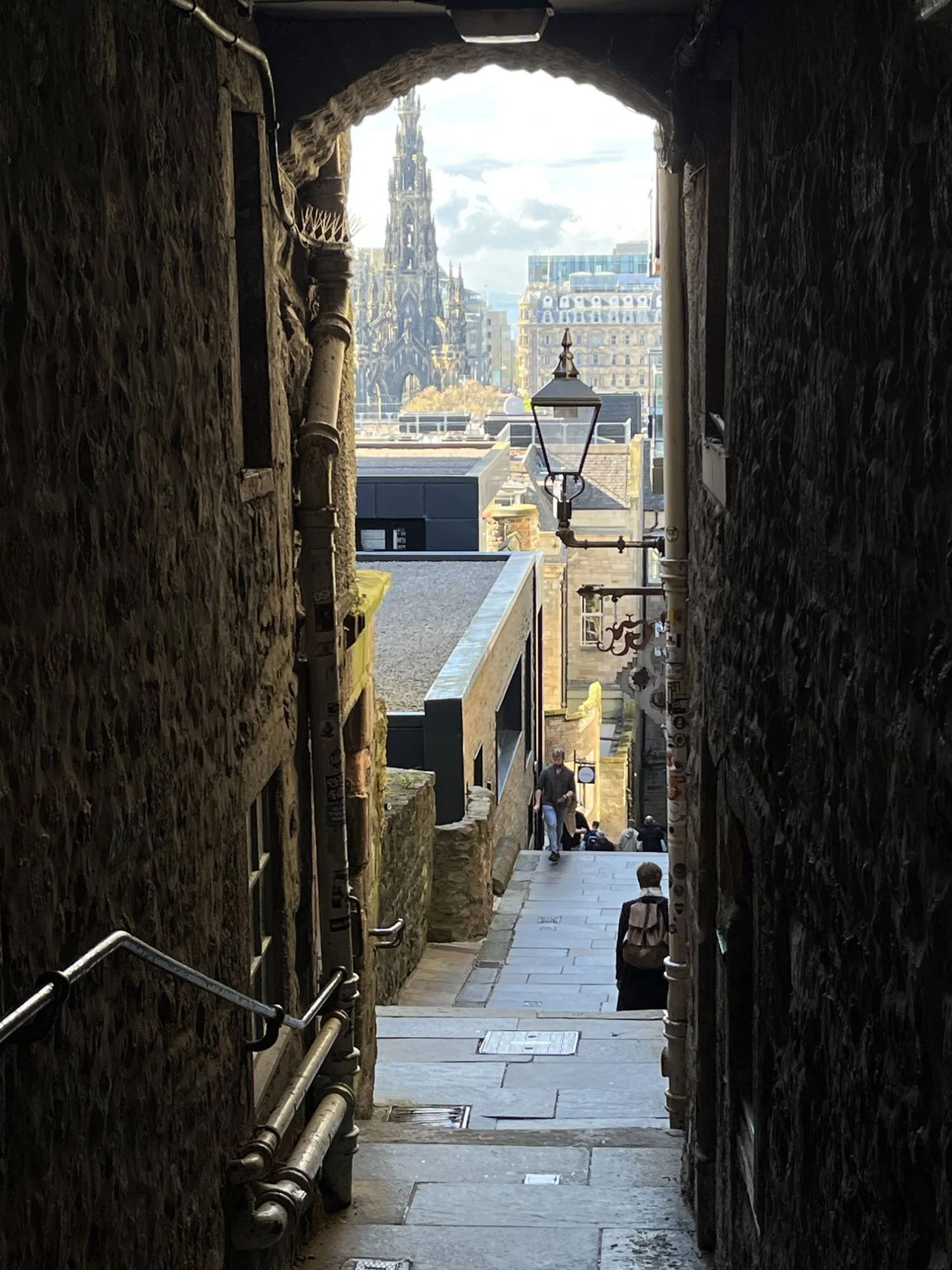
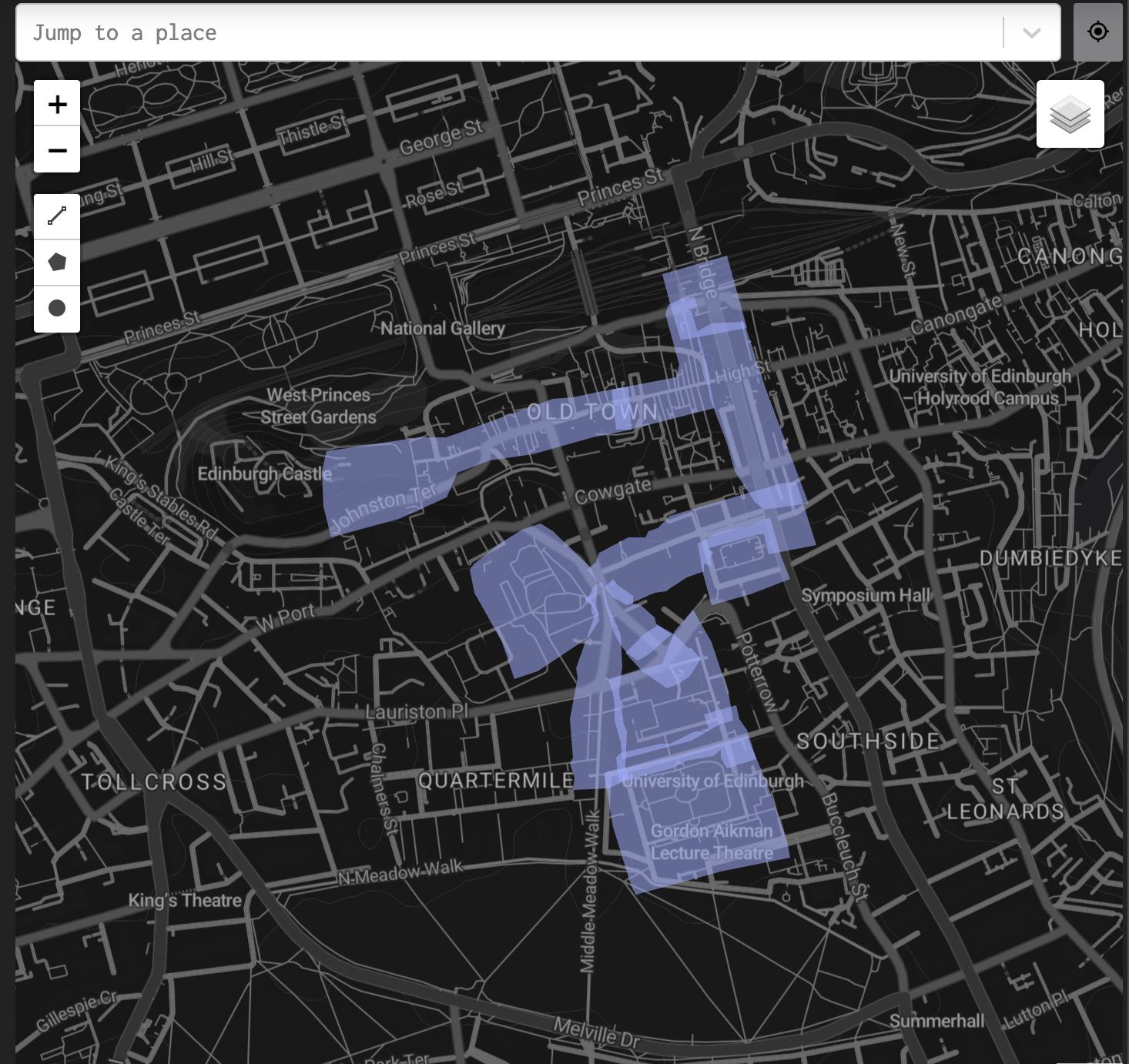
Edinburgh sound walk
Digbeth in Birmingham is an area currently undergoing rapid transformation, with both demolition and building taking place across the area. Here sounds were overwhelmingly anthropophonic, with much of the sonic space given over to the combustion engine.
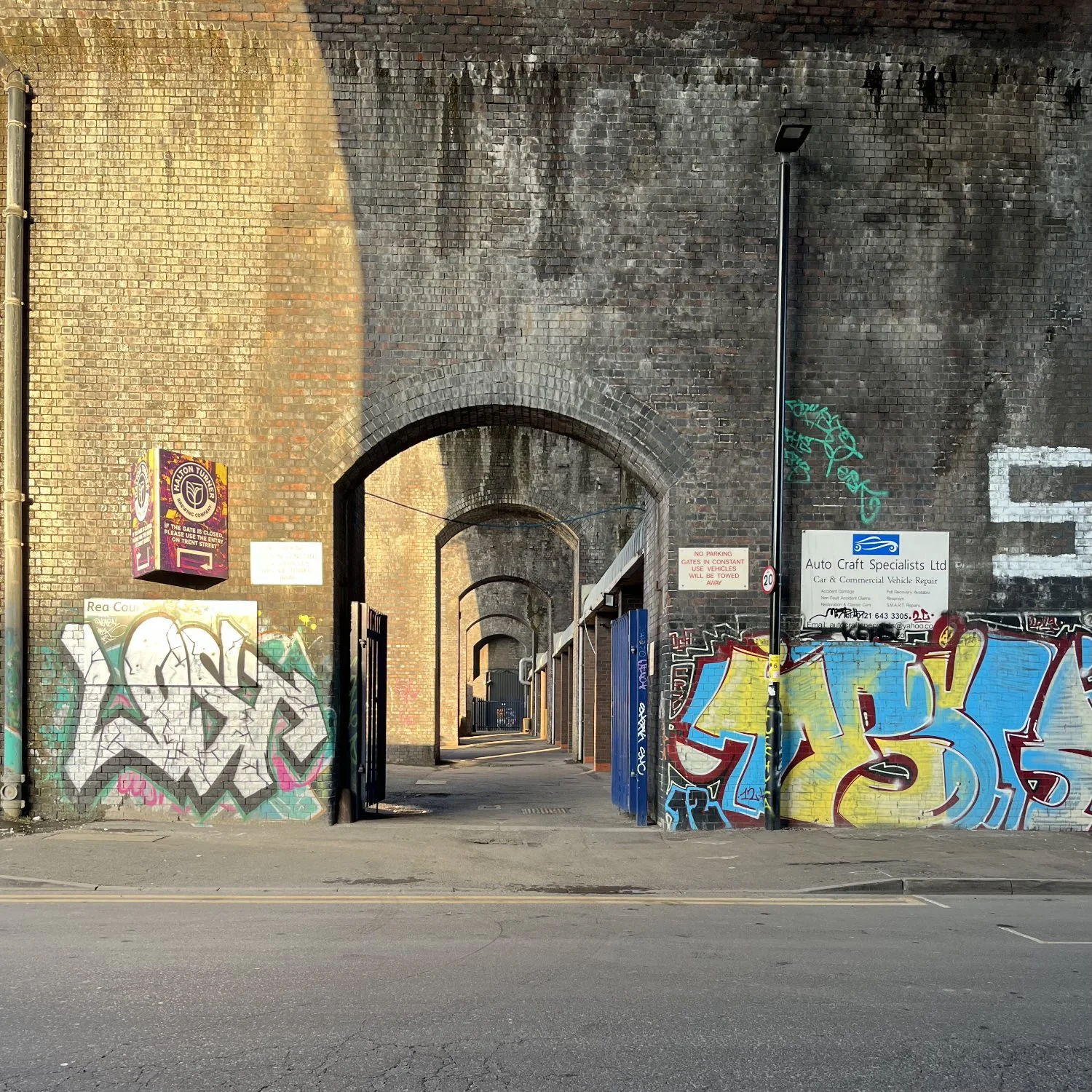
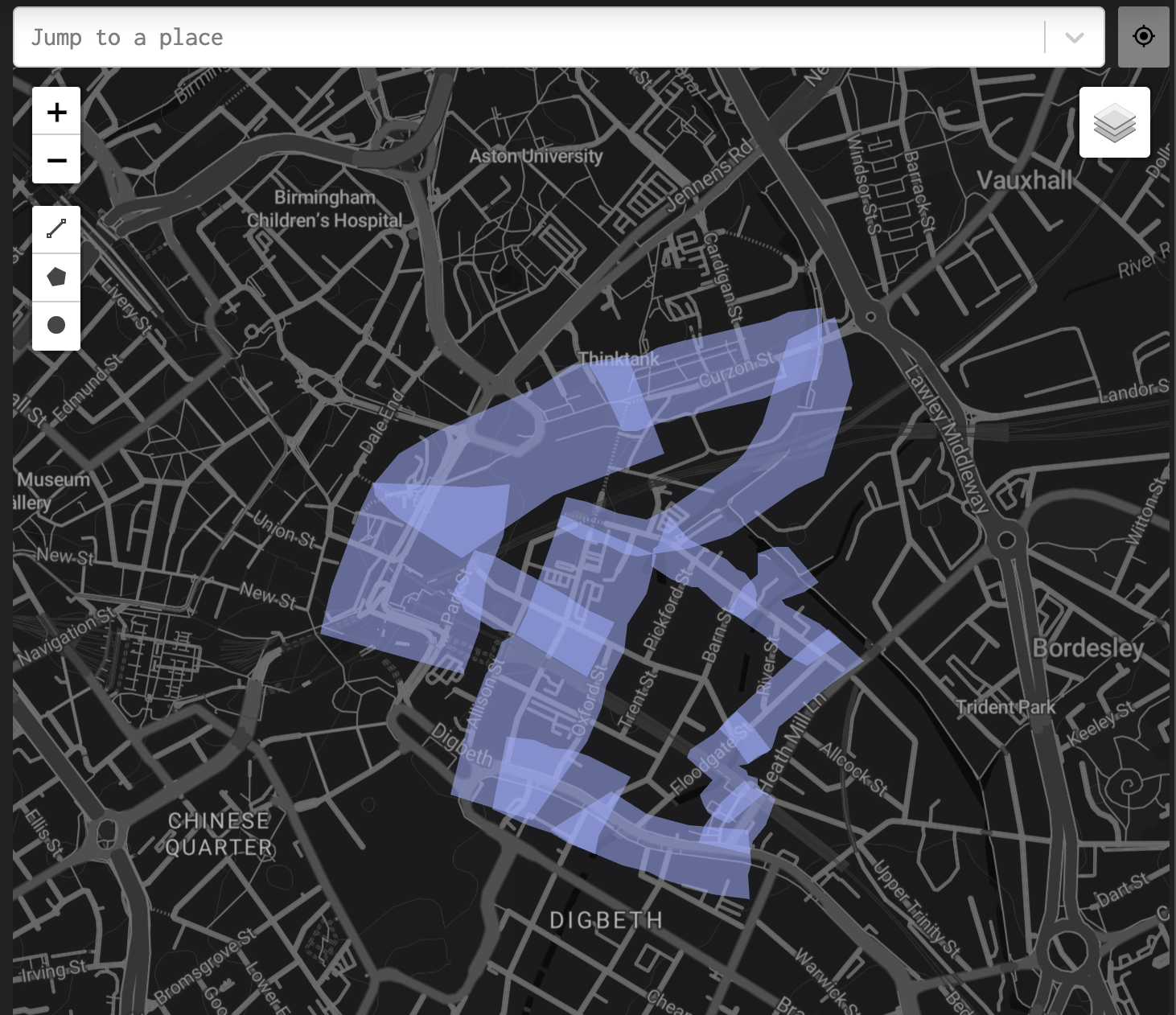
Birmingham sound walk
Dalston in London is perhaps in-between these two states of completion, and while there were some spaces that offered geophonic & biophonic sounds, the soundscape generally tipped towards the anthropophonic.
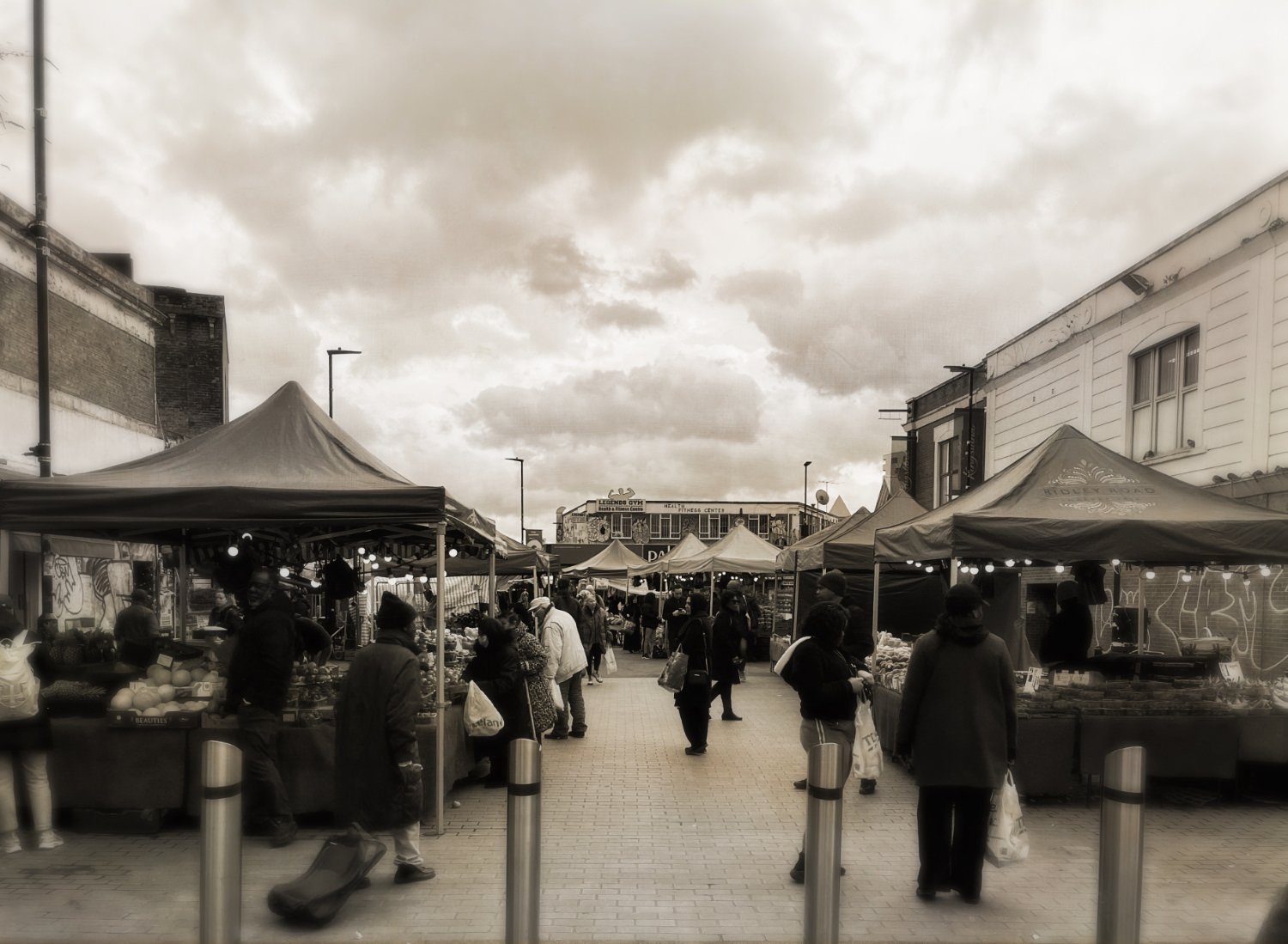
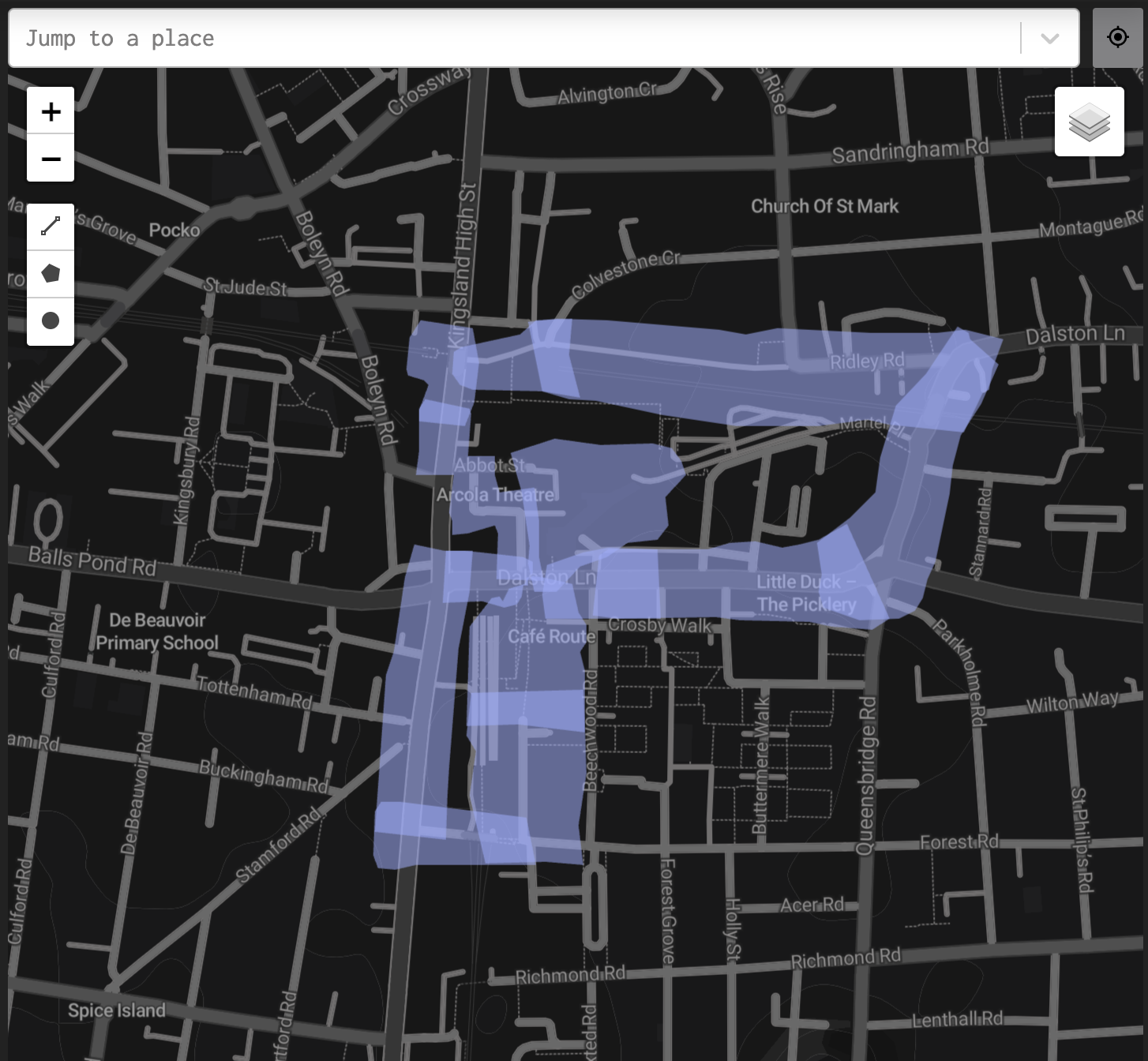
London sound walk
Furthermore, these cities were key locations during the industrial revolution, a point in history which could be considered the beginning of our over-reliance on fossil fuels to power heavy machinery and combustion engines.
The soundscapes bind the movements together that otherwise offer very different kinds of material. There are text instructions, graphics, and conventional notation, articulated in the hope of encouraging a more egalitarian music making where I am less prescriptive and performers are invited to engage with their instruments and colleagues in different ways. It also demonstrates that music, pitch, and melody can be born from the sound of the environment all around us.
It is difficult to think of this piece outside of an environmental context. Whilst making the recordings I was struck by how much of our sonic landscape is given over to the combustion engine and other anthropophonic sounds. So much so, that in cities we only really experience sound in a lo-fi context. This piece then, becomes a record of how these three different cites sounded in the year 2023, a sonic analog of the photograph. My hope is that in the years following this piece’s initial performances, we hear a gradual quietening of our cityscapes, until maybe one day people will not believe our habitat was so loud.
Finally, Where the Paths End is an attempt to incorporate walking into an artistic practice. There is a real beauty to walking and experiencing our habitat with heightened awareness and to hear sounds long diminished in an area they once sounded. How uncanny and beautiful to experience Edinburgh’s George Square in the dead of winter and hear it teeming with student life on a sunny spring day? It’s akin to time travel.
I am fortunate to have had the opportunity to work with Plus Minus Ensemble (Mark, Vicky, Roderick, Mira, Tamaki, and Primož) who were responsible for as much of the sonic character of this piece as I was. It was great also to be able to bounce ideas off Josh and Ganga at Echoes, who gave lots of helpful suggestions for creative sound walks. Whilst I have been using location recordings for the guts of ten years, this is the first project where I have utilised geolocation technology, and I’m excited by its potential and what I can do with it next.
Find the Where the Paths End sound walks for Birmingham, Edinburgh or London in the Echoes app (available for iOS and Android - app install instructions are at the bottom of the sound walk pages).