
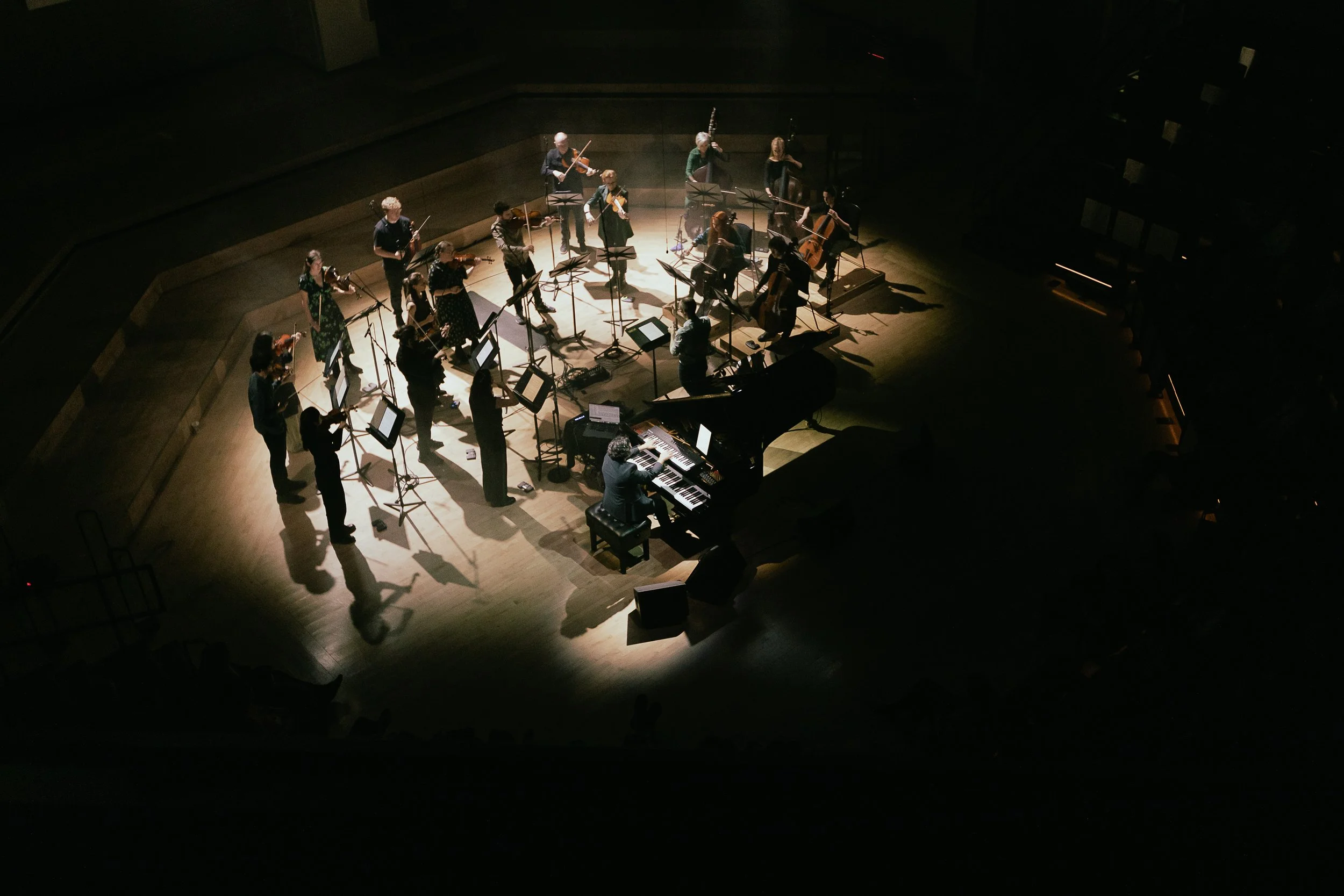
Zubin Kanga performs Schiller’s Piano with Manchester Camerata at RNCM, Manchester, 2024. Photo: Robin Clewley
Laurence Osborn
Schiller’s Piano
In 1942, the furniture of poet Friedrich Schiller — a desk, chairs, cupboard, and piano — were transported from his house in Weimar to the nearby Buchenwald concentration camp. In the workshop at Buchenwald, the prisoners were forced to make replicas of Schiller’s furniture. These would be displayed in Schiller’s house, while the real artefacts were stored underground. The aim was to safeguard Schiller’s furniture from Allied bombing while continuing to present the replicas as totems to Germany’s history.
The prisoners were forced only to re-create the outer shell of the piano. The version of Schiller’s piano at Buchenwald is a counterfeit that makes no music. Its interior is a void.
In Schiller’s Piano, the performer plays piano and sampler together. The sampler uses sounds taken from the raw elements of piano construction: the manipulation of wood, brass, felt and wire. Schiller’s counterfeit piano materialises in many states of being, real and imagined, untouched and destroyed.
Zubin Kanga and Manchester Collective perform Laurence Osborn’s Schiller’s Piano at the Queen Elizabeth Hall, Southbank Centre, London, 2024
Schiller’s Piano was co-commissioned by Zubin Kanga and Manchester Camerata.
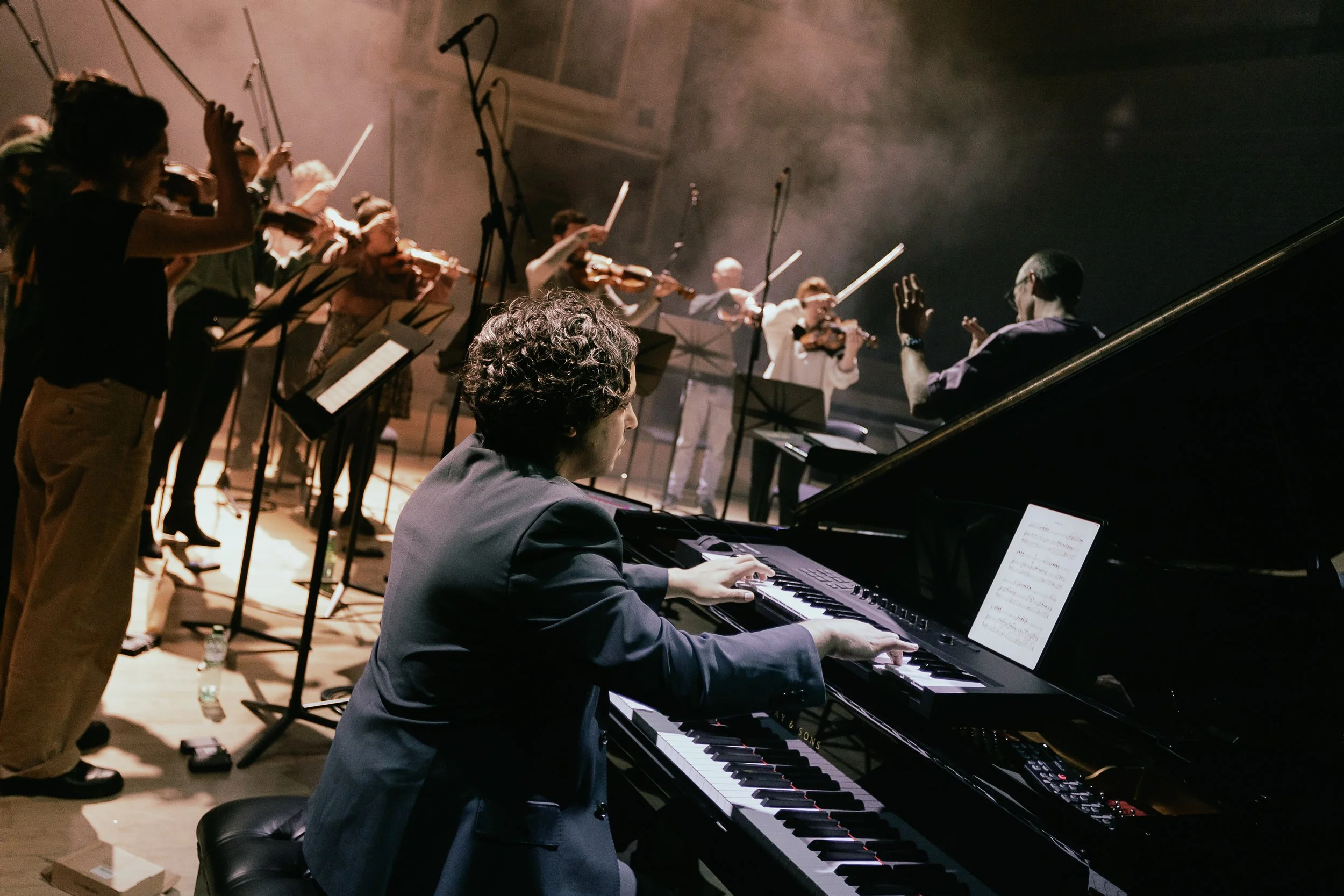
Zubin Kanga playing the sampler with Manchester Camerata, RNCM, Manchester, 2024. Photo: Robin Clewley

Zubin Kanga and Manchester Camerata, Queen Elizabeth Hall, London, 2024. Photo: Pete Woodhead
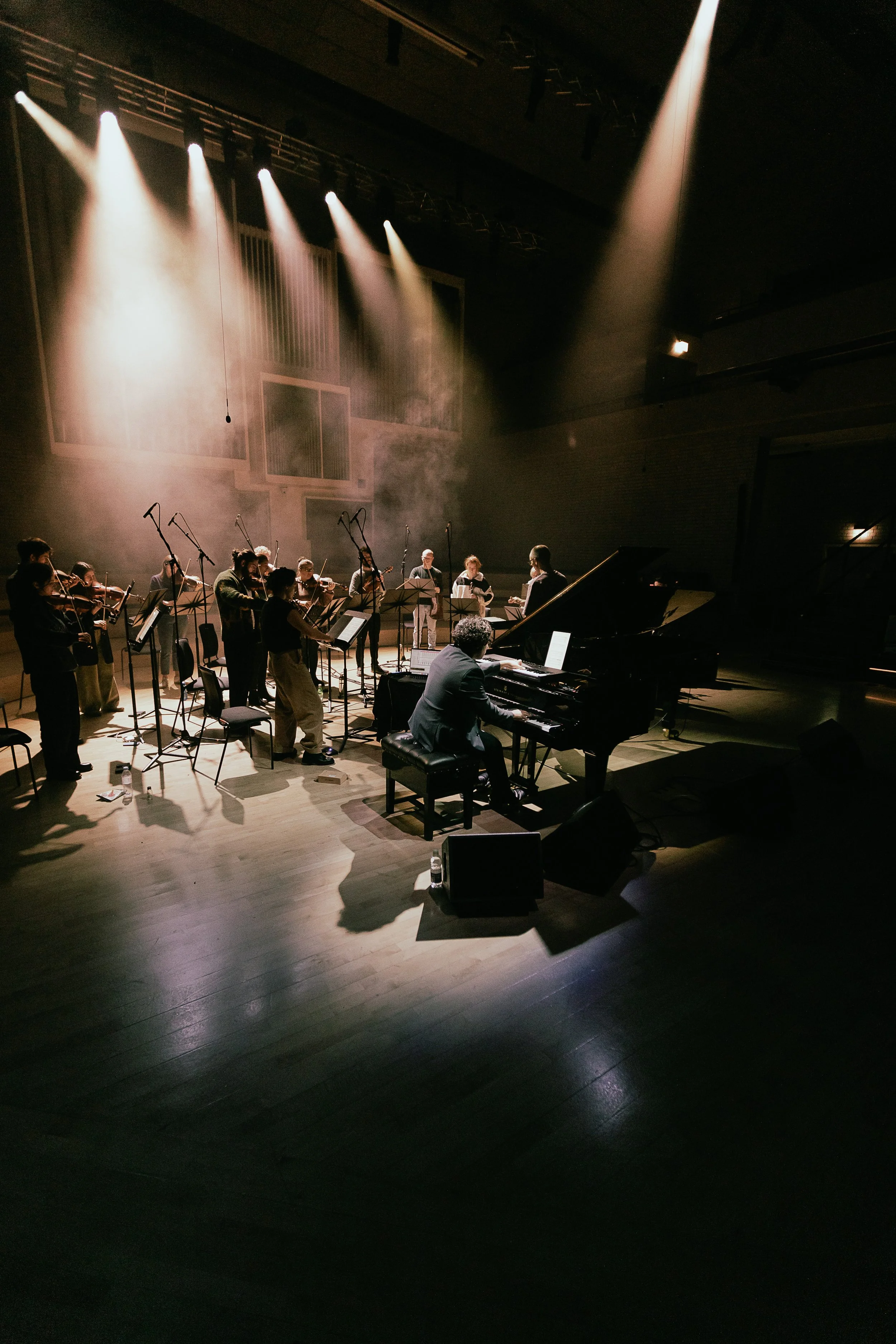
Zubin Kanga and Manchester Camerata, RNCM, Manchester, 2024. Photo: Robin Clewley
